Our Blog

5 Effective ABA Therapy Techniques for Children with Autism

Key Points:
- ABA uses structured, evidence-based strategies to build key skills step by step.
- Different techniques match different needs, from learning basics to improving behavior and social skills.
- Consistency and personalization drive progress, especially when reinforced at home with our unique approach to care.

You've sat through the appointments. You've read the pamphlets. And you still go home wondering whether what you're doing is making a difference for your child. That feeling is more common than you'd think. Parents across Maryland and Ohio reach out to us with the same question: What does good ABA therapy look like in practice?
The answer starts with understanding the techniques behind the progress.
ABA therapy is not one single method. It's a collection of evidence-based strategies, each serving a different purpose. The right combination depends on your child's age, needs, and goals.
Below are five of the most effective ABA therapy techniques used with children with autism, along with examples showing what each one looks like in everyday life.
1. Discrete Trial Training (DTT)
Discrete Trial Training is one of the foundational pediatric ABA strategies used in structured sessions. A therapist breaks a skill into small, teachable steps. They present an instruction, the child responds, and the therapist provides feedback.
Each "trial" is brief and clearly defined. This structure makes learning predictable, which helps children with autism process new information more easily.
DTT in action: A therapist wants to teach a four-year-old to identify colors. She holds up a red block and says, "Touch red." The child points to it. She says, "Great job!" and gives the child a small sticker. Over dozens of repetitions across multiple sessions, the child begins to generalize this skill to other settings, like sorting laundry at home or identifying stop signs outside.
DTT works particularly well during early intervention ABA when children are building foundational skills from the ground up. It fits naturally into center-based ABA therapy environments where structure and repetition are built into the session design.
2. Natural Environment Teaching (NET)
Not every skill needs to be taught at a table. Natural Environment Teaching brings autism therapy methods into the child's natural surroundings, using everyday activities as learning opportunities.
This approach follows the child's lead. A therapist uses what's already happening in the moment to teach language, social interaction, and independence.
NET in practice: During playtime, a child reaches for a toy car on a shelf. Instead of just handing it over, the therapist pauses and models the word "car." The child attempts to say it. The therapist hands over the toy immediately. Over time, the child learns that words get results. This builds communication in a context that feels natural, not forced.
In-home ABA therapy often relies heavily on NET because the home setting provides constant, organic opportunities to practice skills. For Maryland families using ABA sessions at home, this technique can feel seamless within daily routines like morning prep, meals, and bedtime.
3. Behavior Intervention Plans (BIPs)
When a child's behavior is getting in the way of learning or daily life, a structured plan makes a difference. Behavior intervention plans identify the reasons behind a behavior and outline specific strategies to address it.
A BCBA first conducts a functional behavior assessment. This identifies what's triggering the behavior and what the child is gaining from it. The BIP is then built around that information.
BIPs in practice: A seven-year-old throws toys when asked to stop a preferred activity. The assessment reveals that throwing delays the transition. The BIP introduces a visual timer so the child can see the activity ending. It also teaches the child to request "five more minutes" using a card. The throwing decreases because the child now has a functional replacement behavior.
BIPs are a core part of child development ABA because they address barriers that prevent a child from engaging with learning at all. Without managing the behavior, other skill-building efforts stall.

4. Social Skills Training
Many children with autism want to connect with others. The challenge is often knowing how. Social skills ABA teaches children the specific steps behind daily interactions, from starting a conversation to reading facial expressions to taking turns.
This is not about scripting children or forcing eye contact. It's about teaching skills that give children more tools for connection.
Social skills training in practice: A nine-year-old wants to join a group playing a board game at school, but doesn't know how to enter the situation. In therapy, she practices knocking on a table to get attention, waiting for a pause, and asking, "Can I play?" She role-plays this scenario repeatedly with her therapist. When she tries it at school, she has a clear script and the confidence to follow it.
Focused therapy programs at Ever Care ABA often include exercises specifically targeting social skills for school-age children. For families in Baltimore and Maryland, these skills carry into classrooms, playgrounds, and community settings.
5. Skill Development Through Reinforcement
Positive reinforcement is the engine behind skill development in ABA. When a child's behavior is followed by something they value, that behavior is more likely to happen again. Therapists use this principle strategically to build new skills and increase independence.
The key is that reinforcement must be meaningful to the individual child. What motivates one child may not motivate another.
Skill development through reinforcement in practice: A five-year-old is learning to put on his shoes independently. Each time he completes a step without prompting, his therapist gives him a token. When he earns five tokens, he chooses a short video to watch. Over several weeks, the prompts are gradually reduced. He now puts on his shoes with minimal support.
This principle runs through every ABA therapy guidance program at Ever Care ABA. It also connects directly to parent guidance, where caregivers learn to use reinforcement consistently at home so progress doesn't stop when the therapist leaves.
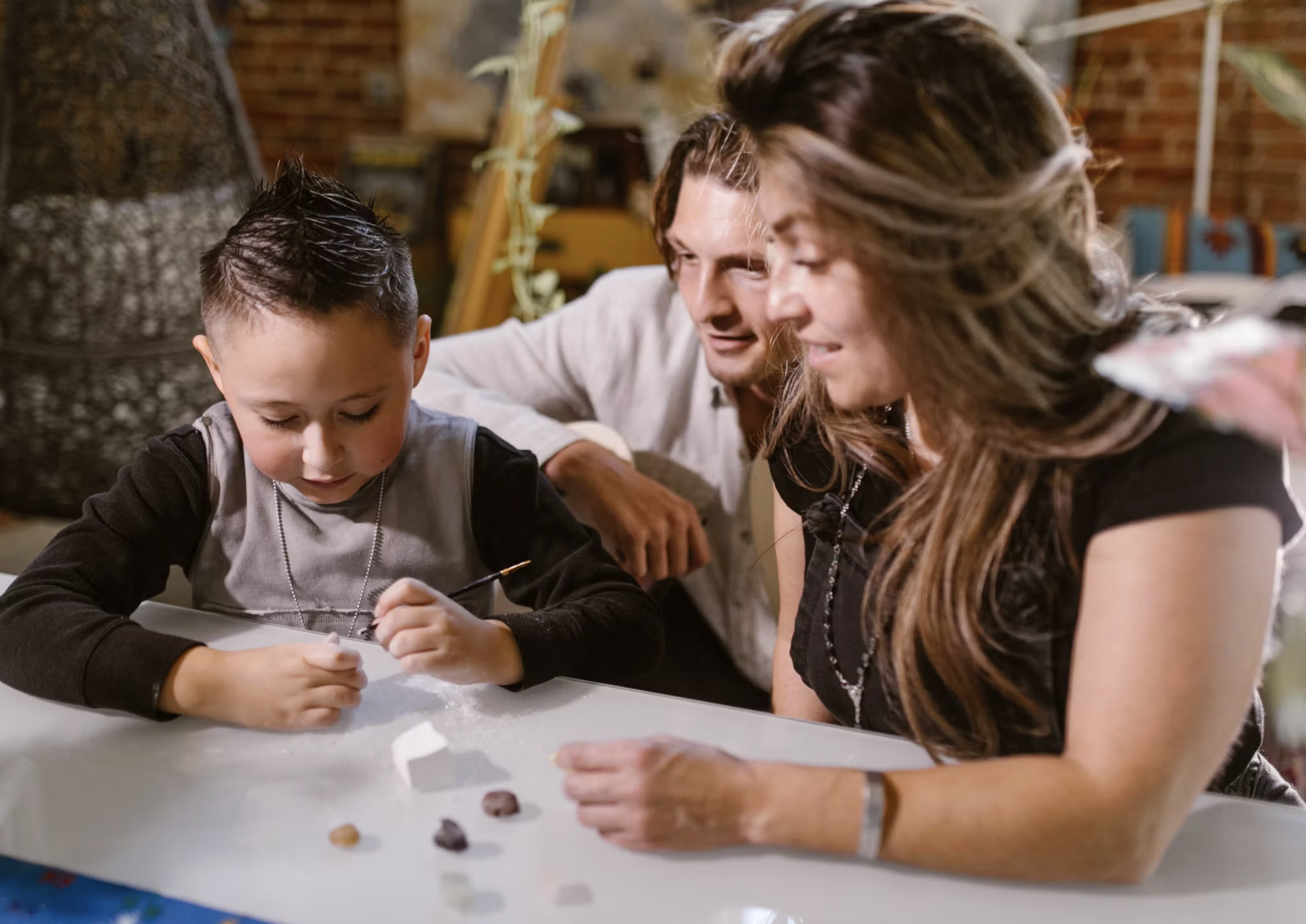
How Ever Care ABA Puts These Techniques Into Practice
Each child at Ever Care ABA receives a personalized plan that draws from these methods based on their specific goals. The team starts with a consultation, reviews existing evaluations, and builds a treatment plan grounded in assessment data.
Services are available in multiple settings, which are dependent on your child’s unique needs:
- In-home ABA therapy for families who want support in their own environment
- Virtual ABA services for flexible, accessible sessions
- Center-based ABA therapy for structured settings and group therapy with other kids
Insurance coverage is accepted through most major plans, and the team will walk you through what your policy covers.

Frequently Asked Questions
1. How do I know which ABA technique is right for my child?
Your child's BCBA will assess their current skills, challenges, and goals. The techniques used in sessions are chosen based on that assessment, not a fixed program.
2. Can these techniques be used at home?
Yes. Parent guidance at Ever Care ABA teaches caregivers how to apply these strategies during daily routines. Consistency between sessions and home makes a measurable difference.
3. At what age can children start ABA therapy?
ABA is most effective when started early. However, children at various stages of development benefit from these approaches. If you have concerns, reach out for a consultation.
4. Are these techniques used for all children with autism?
The techniques are adapted based on each child's needs. A child working on early language development will experience different strategies than a child building social skills for school.
5. Does Ever Care ABA serve families in Maryland and Ohio?
Yes. We provide ABA therapy in Baltimore, MD, and across Ohio. Both locations offer in-home, virtual, and center-based options.

Take the Next Step
Understanding the techniques is a starting point. Finding the right team to apply them is what moves your child forward.
Whether you're in Maryland or Ohio, we are ready to help you figure out what works for your child. Our team builds therapy plans around individual needs, not templates. And we involve parents every step of the way.
Reach out directly to learn more about which techniques and approaches are the best fit for your child.
Ways to contact us:
Maryland: (443) 603-1260
Ohio: (380) 710-2630
Email: support@Ever Careaba.com


Ready To Begin
Get the Support Your Child Truly Deserves
Start your journey with EverCare ABA today. Our team will answer questions, verify insurance, and guide you through every step—so your child can begin thriving with the care they need.