Our Blog

Center-Based ABA Therapy: Structured Interventions for Social Development
Introduction to Center-Based ABA Therapy
Understanding Center-Based ABA Therapy
Center-based Applied Behavior Analysis (ABA) therapy is a specialized, evidence-based approach designed to support children with autism in a structured, controlled environment.
Core Benefits
This therapy format provides consistent routines that reduce anxiety and increase focus, making it easier for children to acquire vital skills. It leverages group activities, peer interaction, and intensive supervision by trained professionals including Board Certified Behavior Analysts (BCBAs) and Registered Behavior Technicians (RBTs).
Structured Environment
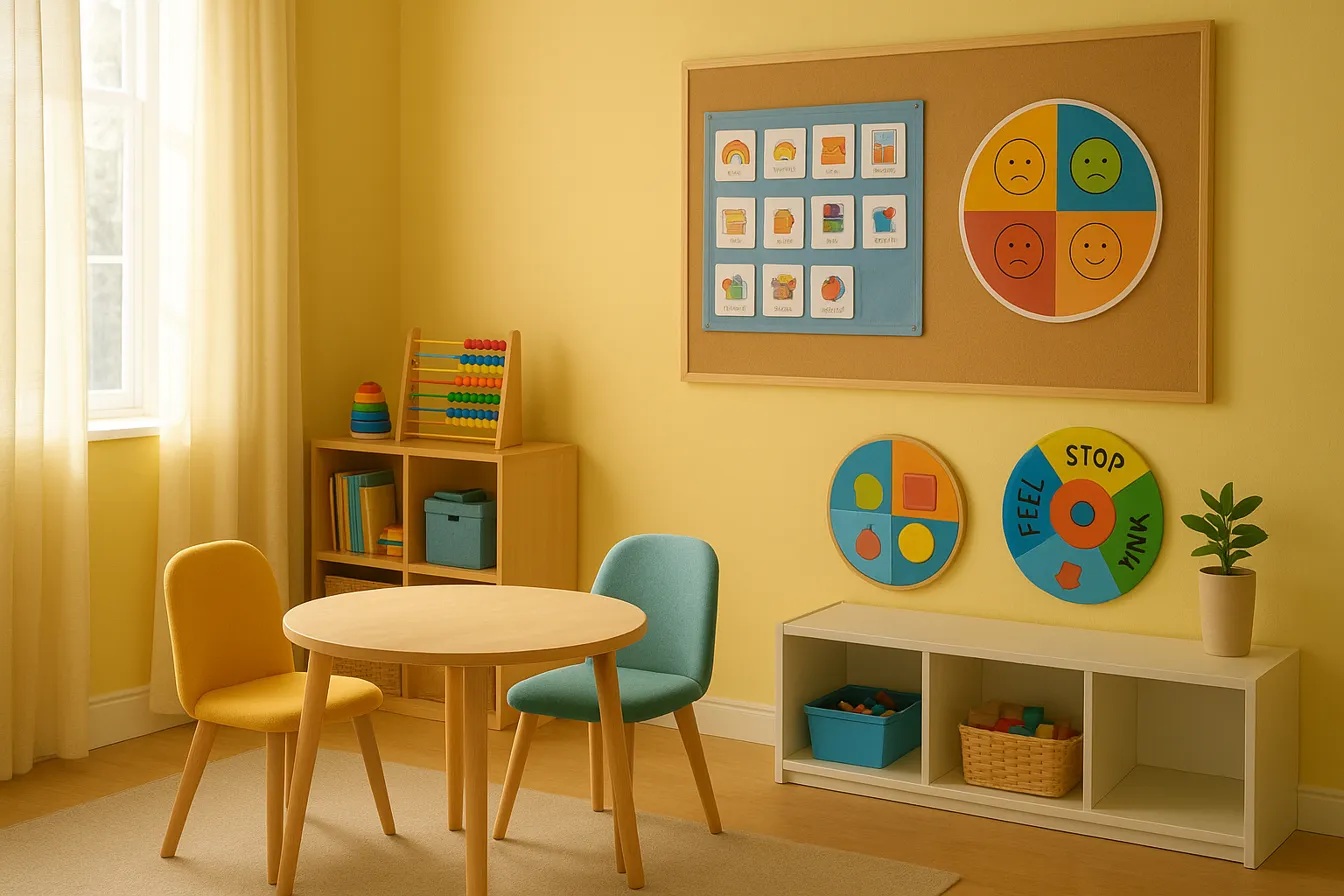
Centers are equipped with specialized resources like sensory tools and communication devices that enhance learning and social skill development. The predictable setting mimics real-world situations such as classrooms, providing a safe space where children practice social skills, communication, and daily living activities.
Comparison to Other Formats
Compared to home-based therapy, center-based ABA has been shown to accelerate skill acquisition—children can learn twice as fast due to increased access to peers, staff expertise, and a distraction-free environment. The structured setting fosters better supervision and immediate modification of treatment plans, optimizing therapeutic effectiveness.
By offering a comprehensive, personalized approach in a supportive setting, center-based ABA therapy plays an essential role in promoting independence and social competence in children with autism.
Understanding Applied Behavior Analysis (ABA) and Its Benefits
What is Applied Behavior Analysis (ABA) therapy, and how does it benefit children with autism?
Applied Behavior Analysis (ABA) therapy is a research-supported approach focused on improving behaviors and skills by understanding the relationships between behaviors and environmental factors. It helps children with autism spectrum disorder (ASD) develop vital skills such as communication, social interaction, self-care, and academic abilities while reducing challenging behaviors.
Basics of ABA therapy
ABA uses detailed assessments to create personalized ABA programs tailored to each child's strengths and needs. It employs the 'A-B-Cs model in behavior analysis'—analyzing what Antecedents (triggers) lead to specific Behaviors and the Consequences that follow—to understand and modify behaviors effectively.
How ABA benefits children with autism
Through structured and naturalistic teaching, ABA increases helpful behaviors and decreases behaviors that interfere with learning or social interaction. Positive reinforcement strategy—offering rewards like praise, preferred toys, or tokens—is a core strategy to motivate children and encourage repetition of desired behaviors. Long-term, intensive ABA therapy has been shown to result in significant improvements in social, communication, and independent living skills.
Techniques like positive reinforcement and ABC model
Techniques such as Discrete Trial Training (DTT) and Natural Environment Teaching (NET) help break down complex skills into manageable steps, facilitating easier learning. The ABC framework guides therapists in modifying environmental triggers and consequences to promote positive changes.
Importance of early and intensive intervention
Starting ABA therapy early, ideally between ages 2 and 6, and delivering it intensively—often 25 to 40 hours per week over one to three years—maximizes developmental gains. Early intervention increases the likelihood of children developing functional communication and reduces the need for special services later in life.
By combining scientific rigor with individualized care and actively involving families, Applied Behavior Analysis (ABA) therapy empowers children with autism to build independence and thrive across social, academic, and daily living environments.
Personalizing Treatment Plans at EverCare ABA
How does EverCare ABA personalize treatment plans for each child?
EverCare ABA takes a detailed and personalized approach to treatment planning that starts with comprehensive assessments. Utilizing standardized tools such as the ABLLS-R (Assessment of Basic Language and Learning Skills-Revised) and the VBMAPP (Verbal Behavior Milestones Assessment and Placement Program), therapists gather a full picture of each child's unique abilities and challenges.
Board Certified Behavior Analysts (BCBAs) play a central role in this process. They analyze assessments alongside caregiver input to develop targeted, measurable goals in critical areas like communication, social skills, behavior management, and daily living skills.
These individualized treatment plans integrate evidence-based strategies including Discrete Trial Training (DTT) and Natural Environment Teaching (NET). This blend ensures that therapy is both structured and functional, fitting the child’s real-world experiences and learning style.
A cornerstone of EverCare ABA’s approach is continuous progress monitoring through data collection. This allows therapists to make timely, data-driven modifications to the intervention plan, optimizing outcomes as the child grows and develops.
Family involvement in ABA is emphasized throughout, with training provided to caregivers so they can reinforce strategies at home. This collaboration supports consistency across all environments, enhancing the child’s ability to generalize skills and maintain progress.
In summary, EverCare ABA’s personalized treatment plans combine thorough assessments, expert clinical oversight, tailored goals, and family partnership, creating a supportive and effective path tailored to each child’s developmental journey.
The Structured Center-Based Environment: Enhancing Social Development

Why Is a Consistent, Predictable Therapy Space Important?
A consistent and predictable therapy environment is fundamental in center-based ABA therapy for children with autism. Such a setting reduces anxiety and confusion, as children associate the space with positive routines and clear expectations. Structured environments support focus and learning by providing stability, which helps children thrive and progress more effectively compared to less controlled settings.
How Do Peer Interactions and Group Activities Support Social Development?
Peer interaction in therapy is at the heart of social skill growth in center-based ABA therapy. Children participate in group activities in ABA like circle time and arts and crafts, where they learn essential social skills such as sharing, turn-taking, and conversational exchanges. These collaborative tasks facilitate emotional regulation and confidence building through role-playing and social imitation.
What Role Do Supervised Therapists and Professional Teams Play?
Professional teams, including Board Certified Behavior Analysts (BCBAs) and Registered Behavior Technicians (RBTs), oversee therapy sessions to ensure high-quality, tailored care. These experts conduct therapist assessments and develop individualized treatment plans, and continuously monitor progress. Their presence enables real-time adjustments to interventions and provides specialized support for each child’s unique needs.
How Does Specialized Equipment Enhance Learning?
Centers are equipped with diverse resources such as ABA Therapy Sensory Equipment, communication devices, visual aids, and toys that facilitate skill acquisition. These tools engage children in naturalistic learning and support the generalization of skills across different settings. Access to such specialized resources enriches therapy, making it more effective and enjoyable.
Center-based ABA therapy's structured learning environment significantly contributes to children's social development by combining routine, peer engagement, expert guidance, and tailored resources to create a supportive and dynamic learning space.
Social Skills Intervention Through Center-Based ABA

Social skill targets: turn-taking, sharing, conversation initiation
Center-based ABA therapy emphasizes teaching essential social skills such as turn-taking, sharing, and initiating conversations. These foundational skills help children with autism engage meaningfully with peers, fostering friendships and social competence.
Group-based social skills interventions (SSIs) and their effectiveness
Group-based social skills interventions are a common feature of center-based ABA. These sessions provide a naturalistic setting for children to practice communication and cooperation with peers. Research supports the effectiveness of group SSIs in improving knowledge of social skills and actual social interactions, though ongoing support is necessary to maintain broader social competence.
Role-playing, peer modeling, and collaborative tasks in building confidence
Therapists utilize role-playing scenarios and peer modeling in ABA within group activities in ABA to enhance children's confidence and emotional regulation. Collaborative tasks such as circle time and arts and crafts encourage children to observe, imitate, and practice social behaviors in a supportive environment.
Generalization of social skills to real-world settings
Center-based ABA therapy integrates strategies to help children transfer social abilities learned in the clinic to everyday situations. Through structured routines and opportunities for peer interaction in ABA, children develop the flexibility needed to generalize skills such as greeting others, sharing, and participating in group activities beyond the therapy setting.
Family Involvement: A Key Component of Center-Based ABA Therapy
Why is family involvement important in ABA therapy for children with autism?
Family involvement is a fundamental aspect of center-based ABA therapy, playing a vital role in helping children generalize skills beyond the therapy setting.
When families actively participate, they reinforce the strategies learned during sessions, applying them consistently at home and in everyday situations. This continuity supports the child's progress in communication, social interactions, and daily living skills.
Parent training, often provided by certified therapists, equips caregivers with practical tools and techniques to engage effectively with their child. This support empowers families to contribute meaningfully to the therapy process, enhancing skill acquisition and retention.
Moreover, family engagement strengthens emotional bonds and builds confidence, creating a positive environment that encourages development. Children benefit from consistent, nurturing interactions that complement formal therapy.
Research affirms that children whose families are deeply involved in their ABA programs demonstrate more rapid improvements and greater long-term success. This collaborative approach ensures that therapy is not limited to sessions but becomes an integrated part of the child's life, fostering meaningful and sustainable growth.
EverCare ABA’s Flexible Therapy Delivery and Family Support
What therapy delivery formats does EverCare ABA offer, and how do they accommodate family needs?
EverCare ABA provides diverse therapy delivery options, including in-home, virtual, and center-based ABA services, tailored to accommodate individual family needs and lifestyles. In-home therapy allows therapists to work directly in the child's natural environment, helping generalize skills and making the child feel comfortable. Virtual ABA therapy offers convenience by enabling remote sessions where parents actively participate, receiving guidance and strategies to reinforce learning at home.
Center-based therapy provides a structured, resource-rich environment with socialization opportunities. This setting supports focused skill development and peer interactions, fostering social and communication abilities vital for daily living and school readiness. Across all formats, EverCare ABA emphasizes family involvement through regular communication, training, and visual supports, ensuring therapy integrates smoothly with family routines and maximizes effectiveness.
How does EverCare ABA support families in navigating autism care and insurance?
Navigating autism care and insurance can be complex, and EverCare ABA is dedicated to helping families through this process. They provide comprehensive support by explaining insurance requirements, including the need for an ASD diagnosis and securing prior authorizations. The team assists families in verifying benefits, understanding different insurance plans, and advocating for coverage.
EverCare ABA collaborates directly with insurance providers to ease administrative tasks, ensuring smoother approval for ABA and other therapies like occupational and speech therapy. They also educate families on legal rights, assist with appeals if claims are denied, and offer resources to empower families as strong advocates for their children’s essential services.
By combining personalized therapy with hands-on guidance through insurance procedures, EverCare ABA reduces stress for families and helps secure consistent, evidence-based interventions that promote their child's development.
Success Stories: Real-Life Improvements Through ABA Therapy

What are some success stories or practical examples of ABA therapy improving outcomes for children with autism?
Applied Behavior Analysis (ABA) therapy has a remarkable record of transforming the lives of children with autism through personalized and evidence-based interventions. For instance, Liam began his journey communicating mainly with gestures and Picture Exchange Communication System (PECS). Over time, structured ABA sessions helped him progress to using verbal requests, greatly enhancing his ability to express needs and engage with others.
Similarly, Ava experienced a significant reduction in aggressive behaviors thanks to positive reinforcement strategies and coping skills taught by her therapists. This improvement not only fostered better behavior regulation but also made daily interactions more positive and manageable.
Independence is another crucial area addressed by ABA. Ethan, for example, learned essential daily living skills such as dressing and self-feeding, which boosted his confidence and reduced reliance on caregivers.
Social development also flourishes in a center-based ABA environment. Sophia developed skills like initiating conversations and responding to social cues, helping her form friendships and interact more comfortably with peers.
These success stories highlight how ABA therapy supports meaningful gains in communication, behavior, social initiation, and independence, empowering children to build fulfilling lives with greater autonomy and joy.
Conclusion: The Impact of Center-Based ABA on Social Development and Independence

What Are the Benefits of Structured Center-Based ABA Therapy?
Center-based ABA therapy offers a highly structured and predictable environment tailored specifically for children with autism. This consistency reduces anxiety and enhances learning by providing clear routines and focused attention from trained professionals. Compared to home-based programs, children learn and master skills significantly faster in center-based settings due to increased supervision, peer interactions, and access to specialized resources.
How Are Social Skills, Communication, and Daily Living Skills Integrated?
Therapy sessions incorporate a variety of evidence-based interventions like Discrete Trial Training (DTT) and Natural Environment Teaching (NET). Group activities in ABA such as Circle Time and Arts and Crafts allow children to practice essential social skills—sharing, turn-taking, and initiating conversations—in a naturalistic social context. In addition, daily living skills like toileting and handwashing are embedded into Real-World Learning Scenarios, promoting independence.
What Is the Role of Professional Teams and Family Collaboration?
Center-Based ABA Therapy is delivered by interdisciplinary teams including Board Certified Behavior Analysts (BCBAs) and Registered Behavior Technicians (RBTs). These experts conduct thorough assessments, develop Individualized ABA Treatment Plans, and continuously monitor progress with Data-Driven ABA Strategies. Family involvement remains a cornerstone of the therapy, with Parent Training in ABA ensuring strategies are reinforced at home, increasing overall effectiveness.
What Are the Long-Term Outcomes and School Readiness Benefits?
Long-term, intensive Center-Based ABA Therapy leads to marked improvements in Social Development through ABA Therapy, communication, and adaptive skills. The structured, peer-rich environment simulates classroom settings which build School readiness through ABA Therapy by fostering imitation, matching, and participation in group routines. These gains facilitate smoother transitions into educational environments and support children’s successful integration into schools and communities.
Looking Ahead: Empowering Families Through Center-Based ABA Therapy
Evidence-Based, Personalized ABA Services
Center-based ABA therapy is grounded in scientifically supported methods that focus on each child's distinct needs. Using tools like ABLLS-R and VBMAPP, therapists assess strengths and challenges to tailor treatment plans specifically for social, communication, and daily living skills. This personalized approach ensures that children receive interventions designed to maximize their development and independence.
Continuous Monitoring and Predictive Progress
Therapists regularly collect data and monitor behaviors to track progress in real time. This ongoing evaluation allows for adjustments to interventions, ensuring sustained improvements and preventing setbacks. Predictive tools help professionals anticipate challenges and guide families through developmental milestones, contributing to long-term success.
Family Engagement and Advocacy
Active family involvement is a cornerstone of center-based ABA therapy. Parents receive training to reinforce strategies at home, promoting consistency across environments. Empowered with knowledge and skills, families become advocates for their child’s needs, enhancing therapy outcomes and enabling smoother transitions into schools and communities. Collaborative partnerships between therapists and families foster confidence and hope, supporting children’s growth beyond the therapy center.


Ready To Begin
Get the Support Your Child Truly Deserves
Start your journey with EverCare ABA today. Our team will answer questions, verify insurance, and guide you through every step—so your child can begin thriving with the care they need.