Our Blog

Getting Started with Virtual ABA Therapy Services
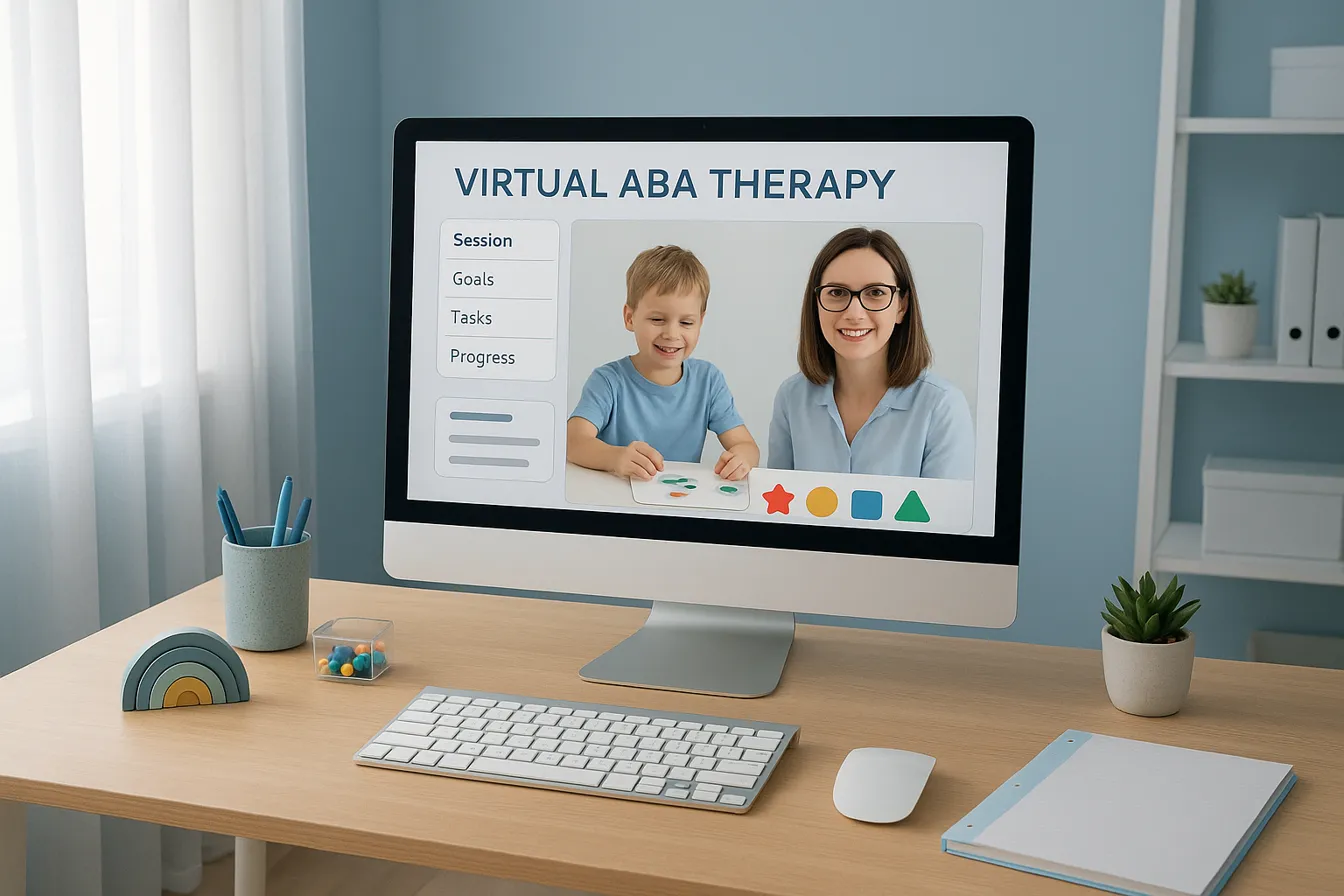
Introduction to Virtual ABA Therapy
What is ABA Therapy?
Applied Behavior Analysis (ABA) therapy is an evidence-based approach to support children with autism spectrum disorder (ASD). It focuses on reinforcing positive behaviors, teaching communication, social, and daily living skills through structured techniques like discrete trial training and natural environment teaching.
Rise of Virtual ABA Therapy
Virtual ABA therapy, also known as telehealth ABA, delivers these interventions remotely through secure video conferencing platforms. It emerged as a vital service during the COVID-19 pandemic, ensuring therapy continuity while respecting health safety measures. Today, it remains a valuable option across the United States, particularly benefiting families who face travel or scheduling challenges.
Benefits to Families and Children
Virtual ABA therapy offers several advantages. Children receive therapy in their familiar home environment, which reduces anxiety and enhances engagement. Family members, especially parents, become active participants through direct coaching, promoting skill generalization into daily routines. Additionally, telehealth eliminates travel burdens and reduces costs, making high-quality care accessible to families, including those in rural or underserved areas.
Understanding Applied Behavior Analysis and Virtual Therapy Formats

What is Applied Behavior Analysis (ABA) therapy?
Applied Behavior Analysis (ABA therapy for Autism Spectrum Disorder) is a scientifically validated approach focused on improving essential skills like communication, social interaction, and daily living tasks in children with autism. It involves analyzing the relationship between antecedents, behaviors, and consequences, then using positive reinforcement to encourage helpful behaviors while reducing challenges. Each ABA program is customized to address the child's specific strengths and needs, with goals in areas such as language development, social skills, and self-care.
ABA therapy is recognized as the gold standard for autism treatment in the United States, endorsed by reputable organizations including the U.S. Surgeon General. Licensed professionals, particularly Board-Certified Behavior Analysts, oversee the therapy to ensure effective and ethical implementation. These programs rely on continuous data collection and analysis to monitor progress and adjust interventions accordingly.
Delivery formats including virtual ABA therapy
ABA therapy can be delivered through multiple formats to suit families' needs and circumstances. These include:
- In-home therapy: Sessions occur within the child’s natural environment, allowing skills to be learned and reinforced amid daily routines.
- Center-based therapy: Conducted in specialized facilities with structured settings and resources.
- Community-based therapy: Focuses on developing skills in public or social settings to encourage independence and generalization.
- Virtual ABA therapy: Delivered remotely via secure, HIPAA-compliant video platforms, enabling therapy access regardless of geographic location or travel restrictions.
Virtual ABA therapy has gained prominence, especially during and after the COVID-19 pandemic, proving equally effective when supported by qualified clinicians and active caregiver participation. It offers advantages such as convenience, reduced costs, and the ability for children to engage in therapy from familiar surroundings.
How therapy is personalized and family-centered
ABA therapy emphasizes personalization, tailoring interventions to each child's unique behavioral needs and family priorities. Treatment plans are developed through initial assessments conducted by BCBAs, considering factors like developmental level, behavior challenges, and communication goals.
Family involvement is a cornerstone in both in-person and virtual ABA therapy. Parents and caregivers are actively engaged as partners, often receiving coaching to implement strategies during daily activities. This collaboration enhances consistency, promotes skill generalization, and fosters confidence in managing behaviors outside of therapy sessions.
Providers like EverCare ABA offer flexible options including in-home, virtual, center-based, and community-based programs, all designed to best accommodate family schedules and preferences while prioritizing individualized care and positive outcomes.
Starting Virtual ABA Therapy: The Initial Steps

What Does the Initial Consultation Process Involve?
The journey into virtual ABA therapy typically begins with a detailed initial consultation conducted via HIPAA-compliant ABA therapy platforms. During this step, a Board Certified Behavior Analyst (BCBA) gathers essential background information, discusses family priorities, and outlines the therapy process. This meeting sets clear goals and expectations while providing an opportunity for parents to ask questions and understand their active role in the therapy.
How Are Assessments Conducted Virtually?
Virtual assessments combine parent interviews, online ABA therapy questionnaires, and video observations of the child’s behavior within their natural home environment. This approach allows clinicians to accurately evaluate communication, social interactions, and adaptive skills without the constraints of a clinical setting. Tools such as parent-recorded videos and live sessions enable a thorough understanding of strengths and areas needing support.
How Are Individualized Treatment Plans Developed?
Following the virtual assessment, the BCBA designs a personalized ABA care plan that addresses each child's specific behavioral and developmental needs. Plans focus on measurable goals like improving communication, daily living skills, and reducing challenging behaviors. Interventions, including discrete trial training and natural environment teaching, are customized to the child’s abilities and family routines. Regular data collection ensures progress is monitored and plans adjusted for optimum effectiveness.
What Roles Do BCBAs and Technicians Play in Virtual Therapy?
BCBAs oversee all aspects of ABA therapy anywhere, from assessment and treatment planning to supervision and ongoing adjustments. Registered Behavior Technicians (RBTs) conduct direct therapy sessions remotely or in conjunction with caregivers, following the BCBA’s protocols. This collaborative model emphasizes parent training in virtual ABA and problem-solving, empowering families to maintain consistency and generalize skills throughout daily life.
How Does EverCare ABA Personalize Therapy for Each Child?
EverCare ABA exemplifies individualized care by using comprehensive assessments—including observations, interviews, and standardized tools—to identify each child’s unique strengths and challenges. They develop personalized ABA therapy plans that prioritize the child’s developmental stage and family priorities, focusing on communication, social skills, and daily living abilities. Family involvement is integral, with caregivers actively trained in reinforcement strategies to support continuous progress outside therapy sessions. This ensures a personalized and effective intervention aligned with the child’s needs.
The Crucial Role of Family Involvement and Parental Support

Why is family involvement important in ABA therapy?
Family involvement is essential in ABA therapy because it ensures consistency and reinforcement of therapeutic strategies across various environments, which accelerates skill development.
When caregivers are actively engaged, they become empowered with the knowledge and tools needed to support their child's progress, ultimately fostering greater motivation and generalization of skills.
By participating, families enable ongoing communication and collaboration with clinicians, allowing the treatment plan to align with the child’s evolving needs and family priorities.
It also strengthens emotional bonds and provides support during challenges, making therapy a shared journey.
This strong partnership improves communication, social skills, and daily living abilities for children with autism.
How do parents support skill generalization?
Parents reinforce skills taught during sessions by applying ABA techniques consistently in daily routines and familiar environments.
Through active participation, parents help children practice and maintain new behaviors beyond therapy sessions, encouraging these skills to transfer naturally across settings.
This generalization boosts the child’s ability to use learned behaviors in real-world situations, increasing independence and adaptability.
What role does parent training and coaching play during sessions?
Virtual ABA therapy strongly emphasizes parent training and coaching as foundational components.
During live telehealth sessions, therapists guide parents on effective strategies, modeling techniques and problem-solving approaches tailored to their child.
This empowers parents to become skilled facilitators and co-therapists, responsible for implementing interventions and managing behaviors consistently.
Such coaching promotes confidence, enabling families to support progress despite challenges.
What practical advice does EverCare ABA offer to parents supporting their children with autism?
EverCare ABA advises parents to maintain consistency through positive reinforcement and structured routines, integrating therapy goals into everyday life.
They encourage careful observation and sharing behavioral insights with therapists to customize interventions effectively.
Open communication and teamwork with clinicians ensure strategies are practically applied at home.
Supporting emotional well-being and advocating for ongoing treatment are emphasized for sustained developmental success.
Through these actions, parents help solidify gains and actively contribute to meaningful, lasting outcomes for their children.
Insurance, Funding, and Accessibility for Virtual ABA Therapy

How does EverCare ABA help families navigate insurance and funding for therapy?
At EverCare ABA, families receive comprehensive support to navigate the complex landscape of insurance and funding for autism therapy. The organization collaborates with prominent U.S. insurance providers such as AHCCCS, Blue Cross Blue Shield, United Healthcare, TRICARE, and Mercy Care. This partnership facilitates efficient benefit verification and eligibility checks, helping families understand what therapies are covered—including behavioral intervention, social skills training, and parent coaching.
EverCare ABA guides families through the often complex insurance authorization process, streamlining access to services. Beyond insurance, families are connected with additional funding avenues, including state-funded programs, grant opportunities, and community organizations like the Autism Society. This ensures a wider accessibility net for those seeking support. Learn more about Insurance Coverage for ABA Therapy and ABA Therapy Insurance Coverage.
How does telehealth reduce cost and geography barriers for families?
Virtual ABA therapy eliminates many traditional barriers seen in in-person treatment. Costs are often reduced by removing travel expenses and facility fees. Additionally, telehealth services offer flexible scheduling which can better accommodate family routines and reduce missed appointments.
Geographically, telehealth bridges the gap for families located in remote or underserved areas where qualified ABA providers may be scarce. This technology-driven solution enables consistent, high-quality therapy from home without the challenges of commuting long distances. Discover benefits of Telehealth ABA Therapy and Telehealth Benefits for Rural Families.
What insurance providers and Medicaid support virtual ABA therapy?
Many insurance companies have expanded telehealth coverage in recent years, especially following the COVID-19 pandemic. Medicaid and private insurers such as Blue Cross Blue Shield, United Healthcare, Aetna, Cigna, TRICARE, and Mercy Care now often cover virtual ABA services for children under 21 when medically necessary.
Families should verify the specific details of their plans and ensure that their chosen provider accepts their insurance. Working with experienced ABA providers like EverCare ABA can simplify this verification process. For more information, see Insurance Coverage for Telehealth Autism Services and Accepted Insurance Providers.
How does telehealth improve access for rural and underserved families?
Telehealth ABA therapy addresses a significant shortage of local ABA providers, especially in rural or underserved regions. Families benefit from receiving expert therapy and parent coaching without relocating or facing prolonged waitlists typically seen in these areas.
This inclusive approach expands therapy availability, ensuring more children with autism receive effective intervention tailored to their needs in their familiar home environment. Learn about Accessibility of virtual ABA therapy and Telehealth ABA for rural families.
| Topic | Highlights | Impact on Families |
|---|---|---|
| Insurance Navigation | Partnerships with major insurers & Medicaid | Simplifies access & coverage clarity |
| Cost & Geography Barriers | Reduced travel costs and facility fees | More affordable & flexible therapy |
| Insurance Providers & Medicaid | Coverage from Blue Cross, Mercy Care, TRICARE, etc. | Greater financing options & fewer gaps |
| Rural/Underserved Access | Remote provision eliminating provider scarcity | Expands therapy to previously underserved |
Measuring Progress and Ensuring Success in Virtual ABA Therapy
Data-driven approaches for tracking progress
EverCare ABA and other Virtual ABA Therapy providers emphasize a comprehensive, data-driven approach to measure treatment success. Regular collection of data on behaviors—such as their frequency, duration, and quality—is fundamental. These metrics provide objective insight into the child's development over time. Caregiver feedback is also incorporated, ensuring that progress reflects meaningful changes across home routines and daily living.
Use of standardized assessments
In addition to ongoing session data, standardized tools like the Vineland Adaptive Behavior Scales are typically administered biannually. Such assessments provide validated measures of improvements in communication, socialization, and practical daily skills. This helps therapists and families understand broader developmental changes beyond individual therapy tasks.
Regular adjustments to treatment plans
Therapy plans in Virtual ABA therapy are not static; they are regularly reviewed and adjusted based on collected data and assessment outcomes. Visual progress charts and graphs often assist both clinicians and families in identifying which strategies are effective and where modifications are necessary. This ensures that the therapy remains personalized and aligned with the child's evolving needs.
Reporting outcomes to families
Clear communication with families is a priority. Providers present progress reports using simple, accessible language and visual aids that help parents track their child's achievements. By involving families in this process, Virtual ABA Therapy fosters collaboration and empowers caregivers to reinforce skills in daily settings.
What are some common goals achieved through ABA therapy?
ABA therapy focuses on individualized goals tailored to promote children's growth and independence. Typical targets include strengthening expressive and receptive communication skills like requesting and following instructions, enhancing social interactions such as emotion recognition and peer engagement, and developing daily living skills that support independence (e.g., toileting, dressing, hygiene). Another critical goal is reducing challenging behaviors through positive reinforcement techniques. These goals are measurable and continuously monitored to ensure steady progress and meaningful improvements in functioning and quality of life.
Moving Forward with Confidence in Virtual ABA Therapy
Embracing the possibilities of virtual ABA therapy empowers families to access effective, personalized care from home.
Families benefit from therapy tailored to their child's unique needs, with skilled BCBAs guiding sessions through secure video platforms. This flexible approach supports communication, social skills, and daily living improvements while easing travel and scheduling challenges.
Ongoing collaboration among therapists, parents, and caregivers fosters consistent progress. Active family involvement ensures strategies are applied beyond sessions, promoting lasting growth and skill generalization in real-life settings.
Virtual ABA therapy holds promise for many children with autism, offering a compassionate, practical solution for connected, continuous development.



Ready To Begin
Get the Support Your Child Truly Deserves
Start your journey with EverCare ABA today. Our team will answer questions, verify insurance, and guide you through every step—so your child can begin thriving with the care they need.