Our Blog

Managing Challenging Behaviors: Effective ABA Strategies
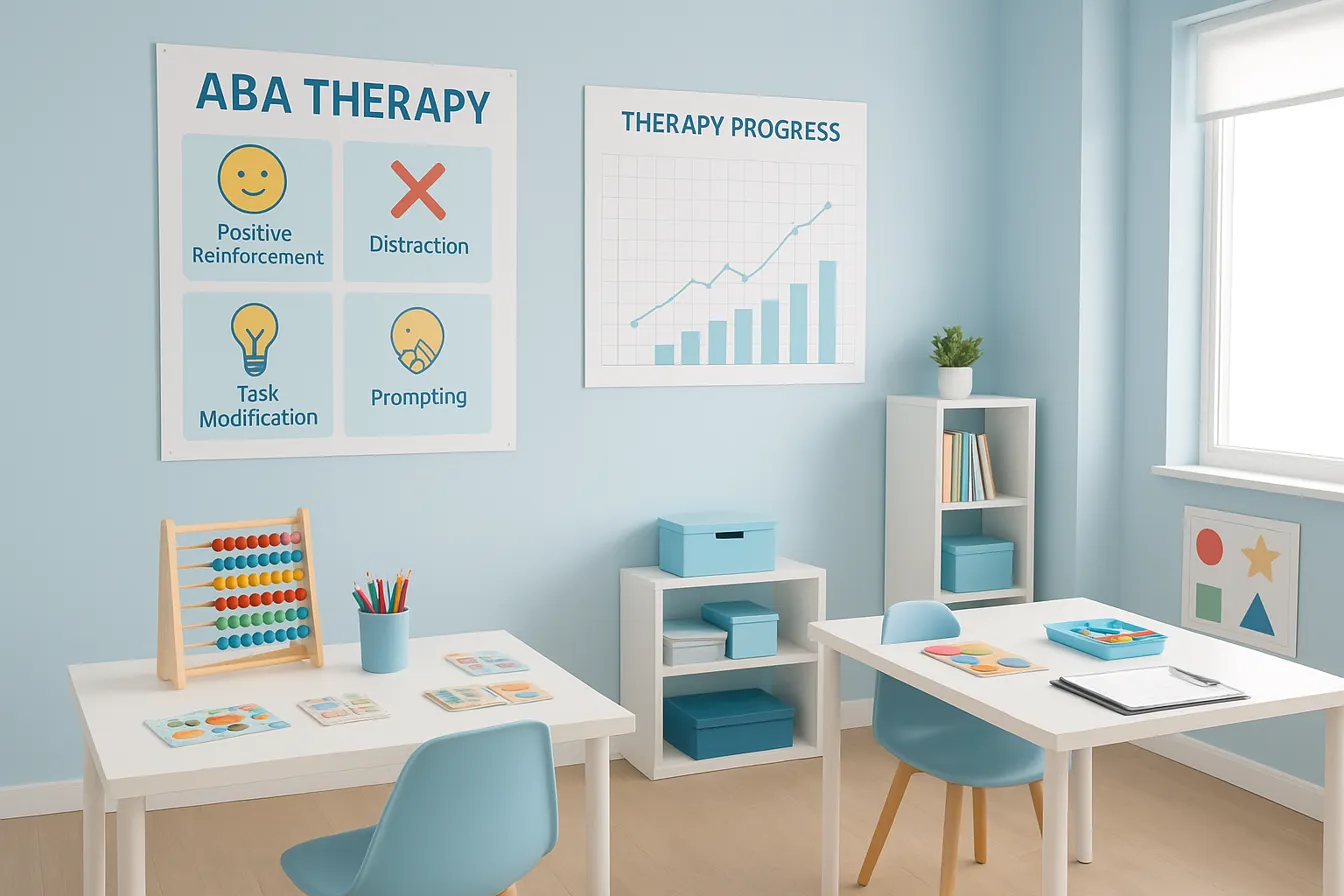
Introduction to ABA Therapy for Autism
What is ABA Therapy?
Applied Behavior Analysis (ABA) is a scientifically-backed therapy that uses principles of learning and behavior to help children with autism develop essential skills. It focuses on increasing helpful behaviors, like communication and social skills, while reducing behaviors that can be harmful or disruptive.
Historical Background and Research Support
ABA therapy was developed in the 1960s and has since become an evidence-based gold standard for autism treatment in the United States. Recognized by the US Surgeon General and the American Psychological Association, ABA uses systematic techniques such as positive reinforcement and functional behavior assessments. Research shows that intensive ABA programs, often delivered for 25 to 40 hours per week over 1 to 3 years, lead to improvements in language, social abilities, and daily living skills.
How ABA Benefits Children with Autism
By tailoring interventions to each child’s unique needs, ABA helps increase independence and communication, while also managing challenging behaviors. Through structured and data-informed approaches designed by Board Certified Behavior Analysts (BCBAs), children with autism can make meaningful progress that enhances their quality of life and supports successful integration in school and community settings.
Personalizing ABA: Tailored Treatment Plans at EverCare ABA

How does EverCare ABA personalize treatment plans for children receiving therapy?
EverCare ABA specializes in crafting highly individualized treatment plans tailored to the unique needs, strengths, and goals of each child. The process begins with thorough assessments, including detailed observations, family input, and Functional Behavior Assessments (FBA). These FBAs play a crucial role by analyzing behavior triggers with ABA, enabling clinicians to understand the reasons behind challenging behaviors.
Based on this comprehensive information, Board Certified Behavior Analysts (BCBAs) develop Specific, Measurable, Achievable, Relevant, and Time-bound (SMART) goals. They then choose evidence-based ABA strategies for autism—such as Discrete Trial Training or Natural Environment Teaching—that align with the child's learning style and motivators.
Role of assessments and functional behavior assessments (FBA)
Functional Behavior Assessments are vital tools at EverCare ABA. They provide data-driven insight into antecedents and consequences influencing behavior. This allows the creation of Behavior Intervention Plan (BIP) that are individualized and effective, ensuring that interventions directly target underlying causes rather than just symptoms.
Setting SMART goals and data-driven decision making
EverCare ABA emphasizes the importance of measurable and achievable goals. SMART objectives are continuously monitored through systematic data collection during therapy sessions. This approach ensures that treatment remains dynamic and adaptive, allowing strategies to be refined over time for maximum progress.
Family participation in therapy planning and implementation
Family involvement is a cornerstone of EverCare ABA’s model. Caregivers are actively engaged in goal-setting and trained to implement strategies consistently across environments. This collaboration empowers families to support skill generalization, reinforce positive behaviors, and enhance overall success beyond therapy sessions.
Through personalized care, thorough assessment, precise goal-setting, and family collaboration, EverCare ABA provides tailored ABA therapy for challenging behaviors that fosters meaningful, lasting improvements for children with autism.
Diverse Therapy Formats: Enhancing Accessibility and Consistency

What are the different formats in which EverCare ABA offers therapy services?
EverCare ABA provides therapy in three main formats: in-home, virtual, and center-based. This flexibility allows families to choose the setting most comfortable and convenient for their child and lifestyle.
Benefits of flexible therapy delivery formats
Offering multiple formats ensures therapy can be consistent despite varied family schedules or geographic constraints. In-home sessions support learning in familiar environments, virtual options increase accessibility especially during times of limited in-person interaction, and center-based therapy provides structured social settings that enhance peer interaction and focused learning. These approaches align with ABA therapy success stories and ABA therapy delivery settings in the US.
Use of technology in data collection and progress monitoring
EverCare ABA utilizes advanced digital tools like Raven Health’s practice management platform for real-time, accurate data collection. Techniques such as event recording, duration tracking, and ABC data entry digitally capture important behavioral information. This technology enhances the security and efficiency of progress tracking and allows therapists to tailor interventions based on solid evidence. The use of ABA therapy components and Functional Behavior Assessment (FBA) ensures data-driven interventions.
Supporting consistency across settings
The combination of flexible formats and technology-driven monitoring helps maintain therapy consistency. Families and therapists can seamlessly coordinate strategies, ensuring skills are generalized effectively across home, school, and community. This holistic, personalized approach maximizes therapy benefits and supports the child’s overall development and independence, reflecting principles from Family involvement in ABA therapy and Promoting independence through ABA.
Effective ABA Strategies for Managing Challenging Behaviors
Understanding Challenging Behaviors through the ABC Model
Applied Behavior Analysis (ABA) employs the ABC model—Antecedent, Behavior, Consequence—as a foundation to understand and address challenging behaviors in children with autism. This model helps identify triggers (antecedents) that lead to specific behaviors and the consequences that maintain or discourage these behaviors. Examples of challenging behaviors include aggression, self-injury, and noncompliance, which ABA aims to reduce by analyzing their underlying functions, known as the ABC model in behavior analysis.
Behavior Intervention Plans (BIPs) and Functional Behavior Assessments (FBAs)
Functional Behavior Assessments (FBAs) play a critical role by gathering data over 2-4 weeks to determine why challenging behaviors occur. FBAs inform development of personalized Behavior Intervention Plans (BIPs), which clearly define target behaviors, set goals, and outline intervention strategies. These plans are collaboratively created with therapists, educators, and families to ensure consistent implementation across environments.
Proactive Strategies
ABA emphasizes proactive approaches such as environmental modifications that reduce sensory overload and distractions. Priming prepares children for upcoming tasks through visual schedules or explanations, reducing anxiety and resistance. Offering choices empowers children and supports autonomy, while visual supports—including timers, charts, and token boards—facilitate understanding and predictability, all examples of proactive ABA strategies.
Reactive Strategies
When challenging behaviors occur, reactive ABA strategies focus on positive reinforcement to encourage desirable behaviors. Immediate praise, token systems, and access to preferred activities help motivate children. Prompting—including verbal and physical cues—guides correct responses, with fading techniques gradually promoting independence.
Teaching Functional Communication and Replacement Behaviors
ABA extensively incorporates teaching functional communication skills such as verbal requests, sign language, or Picture Exchange Communication Systems (PECS). These replacement behaviors fulfill the same needs as challenging behaviors but in socially acceptable ways. Additional coping skills like self-regulation and emotional expression are also taught to support constructive behavior, consistent with using reinforcement in ABA therapy.
ABA Techniques for Skill Building
Techniques like task analysis break down complex skills into manageable steps, while behavior chaining teaches these sequentially to build independence. Modeling desired behaviors offers clear demonstrations for imitation, and prompting supports learning with gradual reduction to foster mastery.
Through these individualized, data-driven strategies, ABA therapy effectively promotes independence, communication, and safety, enhancing the quality of life for children with autism and their families.
Building Essential Skills: From Communication to Daily Living
What types of skills does ABA therapy for autism focus on developing in children with autism?
ABA therapy supports comprehensive skill development vital for fostering independence and quality of life in children with autism.
Communication Skills
Functional communication training is a cornerstone of ABA therapy, using methods tailored to each child's needs. Techniques include teaching verbal language, sign language, and Picture Exchange Communication Systems (PECS). These empower children to express needs, reducing frustration-driven behaviors and facilitating effective interaction.
Social Skills and Integration
ABA uses role-playing, social stories, and structured peer interactions to enhance social skills. These strategies encourage sharing, turn-taking, maintaining eye contact, and understanding social cues, enabling better social integration.
Daily Living Skills
To promote autonomy, ABA targets essential daily activities like dressing, feeding, and toileting. Through task analysis and chaining, these complex behaviors are broken into manageable steps and taught progressively.
Emotional Regulation and Attention
Strategies in ABA also encompass emotional regulation and focus enhancement. Techniques such as visual schedules, calming strategies, and structured breaks assist children in managing emotions and improving attention in classroom and home environments.
Personalization and Family Involvement
ABA therapy uniquely emphasizes individualized skill development based on each child's abilities and challenges. Involving families in therapy ensures that skills generalize across settings, supporting sustained progress and confidence-building.
ABA's holistic approach equips children with foundational skills, empowering them to navigate daily life and social contexts more independently and confidently.
Family Involvement: The Cornerstone of Successful ABA Therapy
How does strong family involvement impact the effectiveness of ABA therapy?
Strong family involvement significantly enhances the effectiveness of ABA therapy for autism for children with autism by ensuring consistency and reinforcement across different environments.
When parents and caregivers actively participate by attending training sessions, practicing ABA strategies for behavior management, and maintaining open communication with therapists, it promotes the generalization of skills beyond therapy sessions. This consistency helps solidify newly learned behaviors and encourages their use in daily routines.
Family participation also boosts a child's motivation through continuous positive reinforcement techniques in ABA. It enables therapists to tailor intervention plans to fit the child's unique needs within their home environment, resulting in more personalized and effective treatment.
Importance of Family Engagement in ABA Therapy
Families are an integral part of the ABA process. Their engagement helps maintain therapeutic gains by integrating ABA principles into everyday activities. Families contribute valuable insights about the child's preferences and challenges, which refine the therapy approach.
Supporting Families Through Training and Education
ABA programs often include caregiver training to equip families with techniques to manage challenging behaviors and teach new skills. Educational resources, hands-on coaching, and video demonstrations empower parents to become active partners in therapy.
Collaboration Between Therapists and Caregivers
Regular communication between therapists and families ensures consistent implementation of Behavior Intervention Plans (BIPs). This collaboration fosters a shared understanding of goals and progress, enabling adjustments to strategies as needed for optimal outcomes.
Emotional Support, Empowerment, and Reducing Caregiver Stress
Family-centered ABA interventions also address caregiver well-being by providing emotional support and reducing stress. Feeling empowered to support their child builds confidence and promotes a nurturing home environment conducive to learning and growth.
Navigating ABA Therapy: Insurance and Support for Families

How does EverCare ABA assist families in navigating insurance and therapy options?
EverCare ABA offers dedicated support to families by guiding them through the complex world of insurance coverage and therapy access. They help families understand their insurance benefits, navigate coverage requirements, and manage the claims process. This includes assisting with benefit verification, intake paperwork, and securing necessary pre-authorizations to start ABA therapy for autism without delays.
Understanding insurance coverage and pre-authorization processes
Insurance plans vary widely in coverage for ABA therapy. EverCare ABA stays current on state laws and insurance policies to clarify what benefits families can expect. They work closely with families to complete and submit pre-authorization requests, a key step required by many insurers to approve ABA therapy for autism services.
Collaboration with insurance providers such as Medicaid and private insurers
EverCare ABA maintains strong partnerships with both Medicaid programs and private insurers like UnitedHealthcare and Blue Cross Blue Shield. This collaboration helps streamline access to care by ensuring that clinical documentation meets insurer criteria and that families receive all eligible benefits. These processes are part of the broader scope of accessing ABA services.
Offering financial assistance resources and advocacy
Recognizing the financial challenges some families face, EverCare ABA connects families with additional support such as grants, financial aid programs, and advocacy services. This holistic approach reduces barriers, making ABA therapy more affordable and sustainable for families.
Ensuring access to personalized, evidence-based ABA services
By combining insurance navigation expertise with a family-centered philosophy, EverCare ABA ensures that children receive personalized, research-backed ABA therapy for challenging behaviors. This approach helps maximize therapeutic outcomes while minimizing stress for families navigating complex insurance landscapes.
Why Individualized, Family-Centered Care is Essential for Ongoing Development
Why is individualized, family-centered care important throughout a child's developmental journey in ABA therapy?
Individualized, family-centered care is fundamental in ABA therapy for challenging behaviors because it involves families directly as partners in the intervention process. By collaborating with families to plan, implement, and evaluate therapy, practitioners can tailor approaches to fit the unique strengths and needs of each child as well as the family’s circumstances. This personalization helps maintain meaningful engagement from the child and ensures progress is sustainable over time.
Family involvement promotes skill generalization across various environments such as home, school, and community. When caregivers are trained and supported, they can consistently apply strategies beyond therapy sessions, enhancing the child’s independence and communication skills.
Moreover, family-centered care helps reduce stress by empowering parents with practical knowledge and coping techniques. This strengthened family bond creates a nurturing environment that is critical to the child’s growth.
By maximizing therapy outcomes with this collaborative, individualized approach, ABA therapy for challenging behaviors supports a child's lifelong development, improving communication, social interaction, and adaptive behaviors essential for a fulfilling life.
Concluding Thoughts: Empowering Families Through Evidence-Based ABA Therapy
ABA Therapy: A Lifeline for Managing Challenging Behaviors
Applied Behavior Analysis (ABA) provides a well-researched, adaptable framework to understand and reduce challenging behaviors in children with autism. By carefully analyzing behaviors and their triggers, ABA therapy crafts personalized, data-driven plans—like Behavior Intervention Plans (BIPs)—tailored to each child's unique needs.
The Power of Personalized, Data-Driven Strategies
ABA uses evidence-based techniques such as functional behavior assessments and positive reinforcement to create effective, individualized interventions. These strategies focus on replacing disruptive behaviors with functional skills that promote communication, independence, and safety.
Family Involvement: The Heart of Success
Collaboration with families ensures that ABA strategies extend beyond therapy sessions, fostering consistency and maximizing progress. Educating parents to understand behavior functions and equipping them with practical tools empowers families to support their children effectively at home.
Seeking Tailored ABA Services
Families are encouraged to explore ABA therapy options that prioritize individualized care and family engagement. With support from trained professionals and insurance coverage options available, ABA therapy presents a promising path to unlocking each child’s full potential and enhancing quality of life.


Ready To Begin
Get the Support Your Child Truly Deserves
Start your journey with EverCare ABA today. Our team will answer questions, verify insurance, and guide you through every step—so your child can begin thriving with the care they need.